When a client changes a selection after approving it, treat the change as a change order: write down exactly what is changing, price the difference, note any effect on the schedule, and have both parties sign before the new work starts. The signed change order then becomes part of the contract. On the design side, the change becomes a new version of the selections that the client approves on its own, while the earlier approved version stays on file unchanged.
What a change order is
A change order is a written amendment to a construction contract that changes the work, the price, the schedule or some combination. In residential remodeling it’s how a contract keeps up with decisions made after signing: a different tile, an added light, a taller backsplash.
The American Institute of Architects publishes a standard form for this, AIA Document G701, Change Order. AIA describes G701–2017 as the form for “implementing changes in the work agreed to by the owner, contractor, and architect.” It has signature lines for all three, and signing a completed form “indicates agreement upon all terms of the change, including any changes in the contract sum (or guaranteed maximum price) and contract time.” Most home remodels don’t use AIA documents, but G701 is a good model of what a change order has to settle: scope, price and time, agreed in writing.
What state contractor regulators say
Requirements vary by state, so check the rules where the project is. Several state regulators publish plain guidance for homeowners and contractors.
- California. The Contractors State License Board tells consumers that changes to a home improvement contract “must be in writing, be legible,” and that added or removed work, substituted materials or a new completion date should be noted “in writing on a ‘change order,’” including any price changes. It adds: “After a change order is signed, it becomes part of the written contract.” A CSLB newsletter for contractors goes further: change orders must be in writing even for “work that will not alter the contract price.”
- Oregon. The Construction Contractors Board advises homeowners to get a change order “any time your contractor makes a change to the contract,” that “both parties should sign the change order, just like a contract,” and that any change in total cost should be on the change order.
- Maine. State law on home construction contracts requires the contract itself to state that any change that “results in a revision of the contract price will be executed only upon the parties entering into a written change order.”
The common thread is clear even where the details differ: in writing, priced, and signed by both sides.
How homebuilders handle changes after selections
Production builders’ rules on this are blunt. Traton Homes’ design center FAQ says that once selections are complete and the selection sheet is signed, “changes will only be permitted with your builder’s consent,” and each change carries “a $250 fee.” A custom designer may not charge a flat fee, but the logic is the same: a signed selection is the baseline, and any departure from it is a separate, priced decision.
A worked example from a kitchen remodel
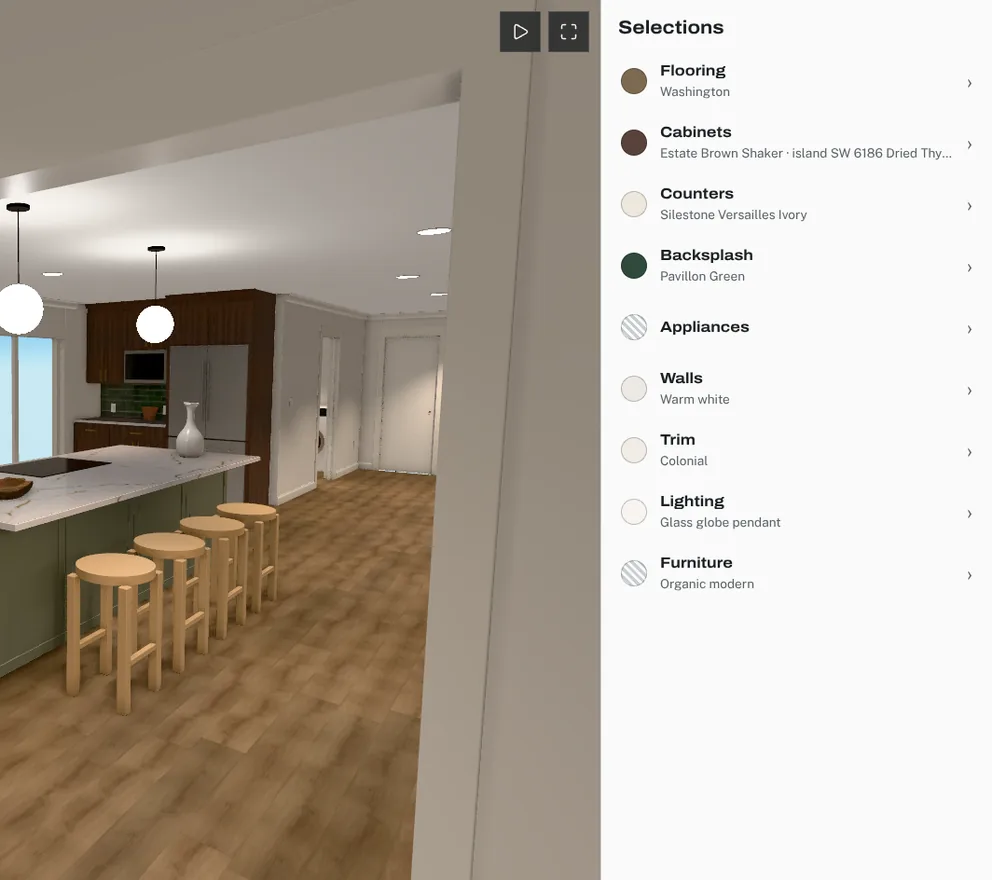
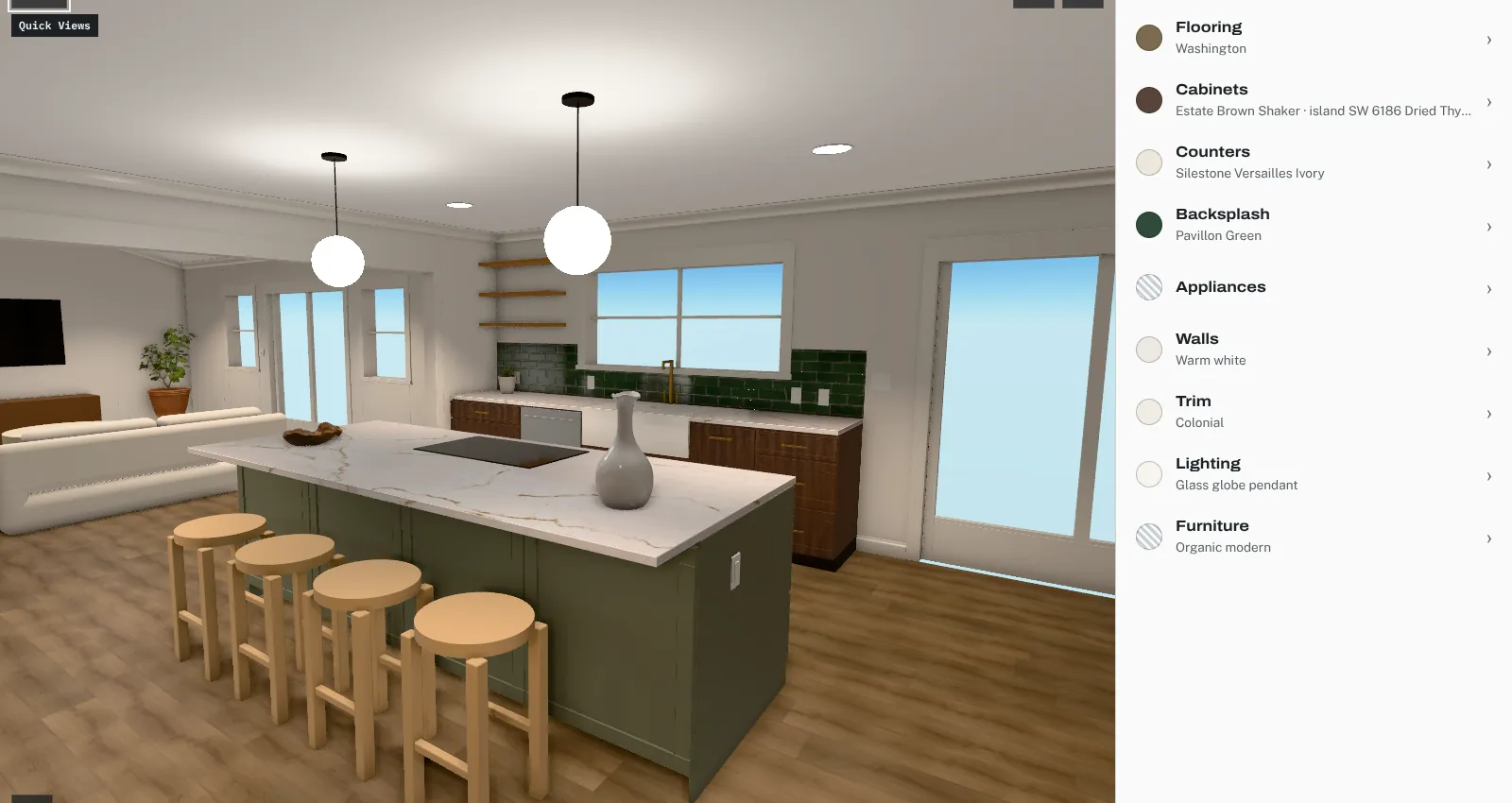
The kitchen remodel Coffered was built around had a backsplash category that included three tile options, each of which could be laid in an offset (running bond) or 45° herringbone layout, at one of two heights. Its estimate used per-square-foot ranges: the tile’s retailer price plus an installation labor range of $10 to $15 per square foot.
Say the client approved Pavillon Green ceramic tile, offset, at the standard 18-inch height. The page measured that at 29.4 sq ft, with an installed range of $18.99 to $23.99 per sq ft, or about $558 to $705.
Later the client asks for two changes:
- Full-height tile around the sink window. The page priced this as an extra 23.2 sq ft, up to the 94-inch ceiling, at the same rate: about $441 to $557 more.
- Herringbone instead of offset. Here the page was explicit that its numbers stopped: “herringbone adds cuts and waste, not priced.” The difference had to come from the installer’s quote.
A change order for this needs both items described separately, the added area, the price of each item (one from the estimate, one from a quote), any added days, and signatures. Switching the tile itself would add a third line. Luna Celadon, at $21.40 to $26.40 installed, would raise the standard-height area to about $629 to $776.
The ranges here are estimates built from retailer listings and published labor ranges. The page labeled them as such, and a real change order uses the contractor’s actual price.
What a good change order records
- A reference to the approved baseline. Which approved version of the selections, and which plan revision, is being changed.
- The change, item by item. Old selection, new selection, location and quantity.
- The price of each item and the new contract total. Show credits for anything removed.
- The effect on the schedule. New lead times, added installation days or a new completion date. Even “no change” is worth writing down.
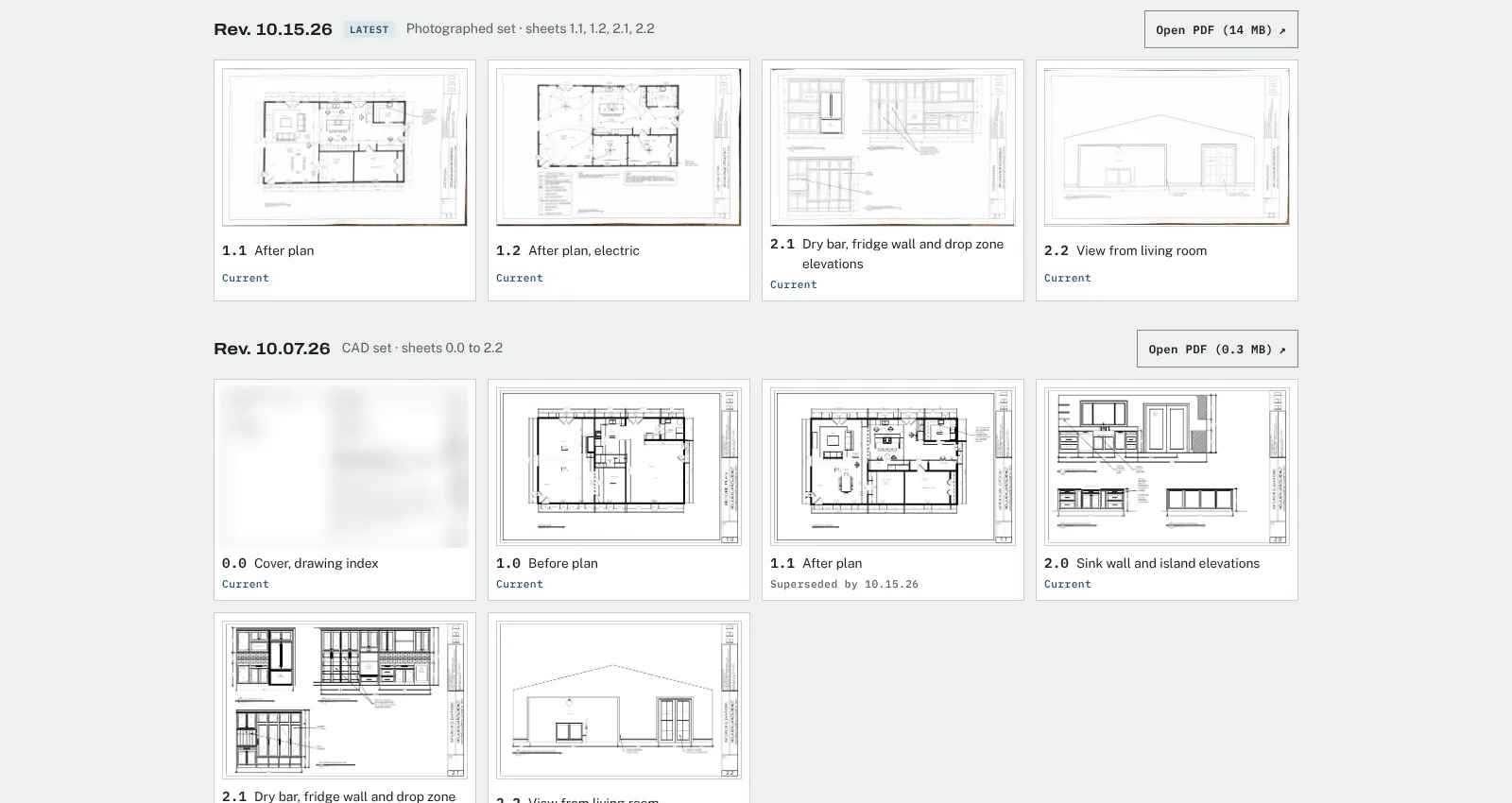
- Any plan sheets affected. A full-height backsplash changes the sink wall elevation. The revised sheet should be issued as a new dated revision.
- Signatures and dates from both parties, before the changed work starts.
Re-approval: a new version, not an edit
On the design side, don’t edit the approved selections in place. Publish a new version with the change and have the client approve it. The earlier approval stays exactly as it was, which is what makes it useful: if there’s ever a question about what was agreed in October versus November, both versions can be opened side by side.
Re-approval also catches knock-on effects. A new backsplash tile may change how the counter or cabinet color reads, and a client who looks at the full room again is more likely to notice before installation than after.
Keep the order straight:
- The client asks for a change.
- The designer prices it and publishes a new version.
- The client approves the new version.
- The contractor issues a change order that references it, and both parties sign.
- Work proceeds.
Where Coffered fits
Coffered is a pre-launch subscription app that publishes client design centers from a designer’s 3D model. Clients approve a specific published version. A change after approval becomes a new version with its own client prices and running total, and the earlier approval stays readable. An optional bids module keeps contractor prices next to the estimate. The change order itself belongs in the contract documents.
Sources
- Summary: G701–2017, Change Order (AIA Contract Documents)
- What Should I Look for in a Contract and Binding Agreements? (California Contractors State License Board)
- Avoid Customer Misunderstandings – Put It In Writing (CSLB newsletter)
- Homeowner Tools & Tips newsletter 23-3 (Oregon Construction Contractors Board)
- 10 MRS §1487, Home construction contracts (Maine Legislature)
- Design Center FAQs (Traton Homes)